Description
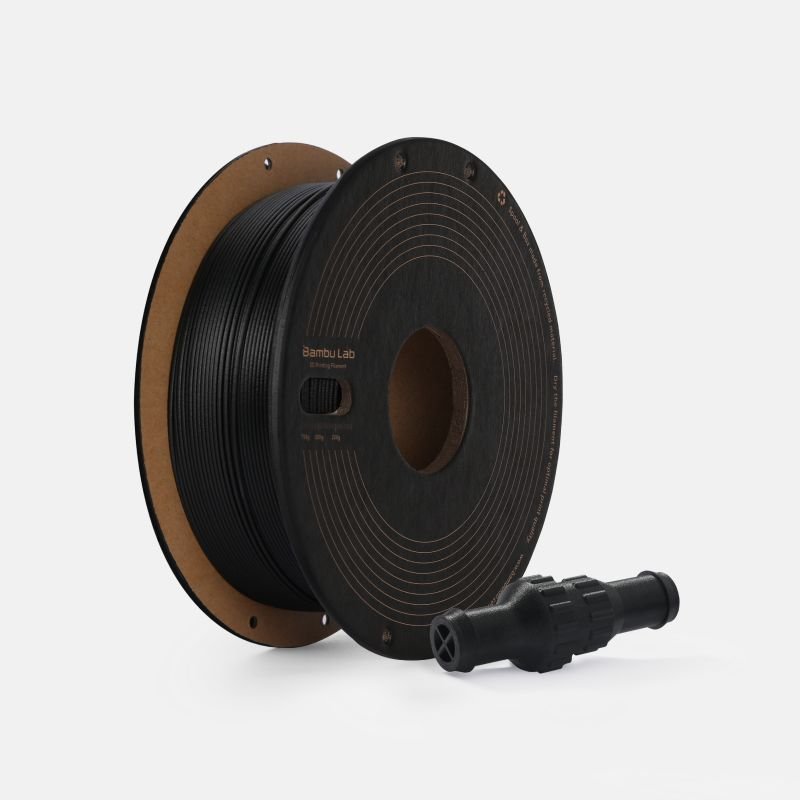
Bambu Lab PPS-CF Black is a carbon fiber reinforced PPS engineering filament built for the most demanding thermal, chemical and structural applications. It combines polyphenylene sulfide with carbon fibre, delivering exceptional heat resistance, flame retardancy, stiffness, and dimensional stability.

This is not a standard engineering filament for everyday printing. Instead, it targets advanced users, industrial workflows and highly specialized technical applications in Cyprus where ordinary nylon, PET-CF, ASA-CF or PC are not enough.
Why Choose Bambu Lab PPS-CF Black
Bambu Lab PPS-CF is designed for unique and challenging applications where maximum thermal performance, chemical stability and structural rigidity matter. Because it uses PPS resin reinforced with carbon fiber, it offers stronger dimensional stability and higher environmental resistance than most conventional engineering filaments.
As a result, it fits high-end engineering uses far better than general-purpose carbon fiber materials.
Ultra-High Heat Resistance
PPS-CF has one of the highest thermal ratings in Bambu’s filament portfolio. Bambu lists a heat deflection temperature of up to 264°C at 0.45 MPa and states that the material can operate continuously above 200°C, which places it well above PA6-CF, PET-CF and many other engineering filaments.
Therefore, users can select PPS-CF for environments where heat resistance, creep resistance and long-term thermal stability are critical.
Flame Retardancy for Critical Applications
Bambu states that PPS-CF achieves a UL-94 V-0 flame retardant rating. Because of that, it is especially relevant for safety-critical components, electronics housings and automotive applications where resistance to ignition and flame spread matters.
Exceptional Mechanical Performance
PPS-CF combines the inherent rigidity of PPS with carbon fiber reinforcement, so it delivers very high stiffness and strong bending performance. Bambu compares it against PET-CF and reports 7160 MPa bending modulus and 142 MPa bending strength in dry state, showing a notable stiffness advantage over PET-CF.
Consequently, this material suits high-precision parts, rigid structural components and specialized industrial fixtures where dimensional stability matters more than impact-heavy toughness.
Solvent and Chemical Resistance
One of the strongest selling points of PPS-CF is chemical stability. Bambu describes it as second only to PTFE in solvent and chemical resistance and says it remains virtually insoluble in solvents below 200°C while resisting acids, bases and salts under normal conditions.
For that reason, PPS-CF is an excellent candidate for parts used in chemically aggressive environments where standard consumer materials would fail quickly.
Ultra-Low Water Absorption
Bambu lists PPS-CF with a saturated water absorption rate of just 0.05%, which is dramatically lower than PET-CF at 0.37% and PA6-CF at 2.35%. As a result, PPS-CF maintains its mechanical and thermal properties far more consistently in humid conditions.
That makes it especially useful when moisture stability is a priority and nylon-based materials would soften or lose stiffness.
Best Uses for PPS-CF
- High-temperature engineering fixtures
- Electronics housings requiring flame retardancy
- Chemical-resistant industrial components
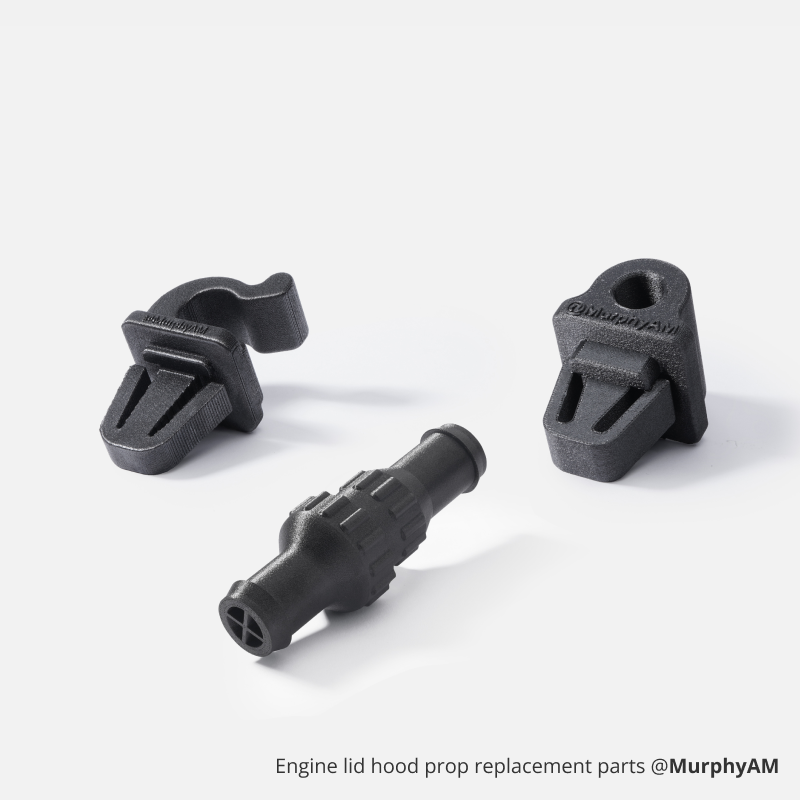
- Precision parts for harsh environments
- Automotive and specialized technical applications
- Rigid structural parts with strict dimensional stability requirements
However, PPS-CF is not intended for casual hobby use. It requires specialized hardware, strict drying and sealed handling during printing, so it is best for users who already operate at an advanced engineering level.
Printer and Hardware Requirements
Bambu specifies PPS-CF for X1E and H2 series printing only. It also states that all AMS systems are not compatible, 0.2 mm nozzles are not compatible, and stainless steel nozzles are not recommended. Instead, hardened steel nozzles are required for reliable processing of this abrasive material.
Recommended Printing Settings
- Drying before printing: 100–140 °C for 8–12 hours
- Printing and storage humidity: below 20% RH, sealed with desiccant
- Nozzle temperature: 310–340 °C
- Bed temperature: 100–120 °C with glue
- Printing speed: below 100 mm/s
- Chamber temperature: 60–90 °C recommended in the printing guide
Furthermore, Bambu notes that higher nozzle and chamber values within the recommended range can improve mechanical performance, especially in the Z direction. It also advises sealed storage with desiccant during printing and careful drying before use.
Physical and Mechanical Properties
Bambu lists PPS-CF with density 1.26 g/cm³, Vicat softening temperature 268 °C, HDT 264 °C, melting temperature 284 °C, tensile strength 87 ± 5 MPa, bending modulus 7160 ± 280 MPa, bending strength 142 ± 5 MPa and impact strength 27.8 ± 2.3 kJ/m². These values place it firmly in the ultra-high-end engineering category.
| Filament Type | PLA Basic | ABS | PC | Normal PA-CF | PA6-CF | PET-CF | PPA-CF | PPS-CF |
|---|---|---|---|---|---|---|---|---|
| Heat Deflection Temperature / ℃ (0.45 MPa) | 57 ℃ | 87 ℃ | 117 ℃ | 184 ℃ | 186 ℃ | 205 ℃ | 227 ℃ | 264 ℃ |
Delivery Across Cyprus
This specialized engineering filament is available for delivery across Cyprus, including Nicosia, Limassol, Larnaca, Paphos and Famagusta.
FAQ About Bambu Lab PPS-CF Black
Is PPS-CF suitable for beginners?
No. This is a specialized engineering filament that requires compatible high-temperature hardware, careful drying and sealed handling during printing.
Why use PPS-CF instead of PA6-CF or PET-CF?
PPS-CF offers much higher heat resistance, far lower water absorption and stronger chemical resistance, so it is better suited for extreme industrial-style conditions.
Is Bambu Lab PPS-CF good for chemical exposure?
Yes. Bambu describes PPS-CF as highly resistant to solvents, acids, bases and salts under normal conditions.
Can I print PPS-CF with AMS?
No. Bambu lists all AMS series as not compatible with PPS-CF.
Is Bambu Lab PPS-CF Black available in Cyprus?
Yes. This product is available for advanced engineering and professional 3D printing users across Cyprus.
Related Links
Bambu Lab PPS-CF Black is a carbon fiber reinforced PPS filament for advanced engineering use in Cyprus. It is designed for ultra-high heat, flame-retardant, chemical-resistant and low-moisture applications that require specialized compatible printers and careful process control.